

ConnectED School Grid is Angaza Center’s rural-ready digital platform designed to strengthen how schools operate while supporting the growth of digital learning. Built as a modular, offline-first system for low-bandwidth environments, it helps schools move from fragile paper-based processes to more reliable, connected, and data-informed operations.
A digital backbone for stronger, more connected schools
ConnectED School Grid is Angaza Center’s flagship school-operations platform, designed specifically for underserved rural high schools across Africa. It reflects our belief that digital literacy is strongest when it exists inside a truly digital school environment; not only in the classroom, but also in the systems that support learning every day.
Built as a modular, cloud-backed, offline-first platform, ConnectED School Grid is tailored for low-bandwidth, resource-constrained school settings. It begins with Student Record Management and is designed to expand into other essential functions such as attendance, fee and finance management, timetable and scheduling, teacher performance, and parent engagement.


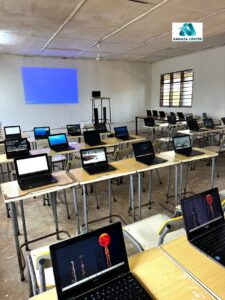
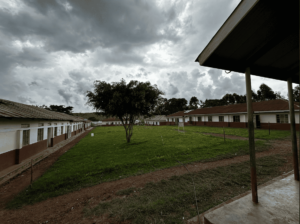


In many rural schools, administrative processes are still handled manually through paper records that are difficult to maintain, search, analyze, or act upon. This creates strain for school leaders, limits visibility, and makes it harder to identify students who may need support. ConnectED School Grid helps schools transition from fragile manual systems to digital records and workflows that are more reliable, organized, and useful.
With stronger school data and systems, administrators can better track attendance trends, identify at-risk learners earlier, monitor fee-related pressures, and improve day-to-day coordination. Teachers benefit from better organization and communication; parents gain clearer lines of engagement; and schools as a whole become better positioned to support student retention, performance, and well-being.
More than software, ConnectED School Grid is part of Angaza Center’s long-term vision for durable,
context-appropriate digital transformation in rural education. It gives schools a practical digital backbone that supports stronger governance, better decisions, and a learning environment where digital literacy can take deeper root.
Core design principles
- Offline-first
- Modular and scalable
- Built for low-bandwidth school environments
- Practical for rural school operations
Why schools need it
- Replaces fragile paper-based processes
- Improves access to records and insights
- Supports better school decision-making
- Strengthens the foundation for digital learning